April 28, 2026
IKBC Participates in the Private Sector Development Council Meeting
Baghdad, Iraq
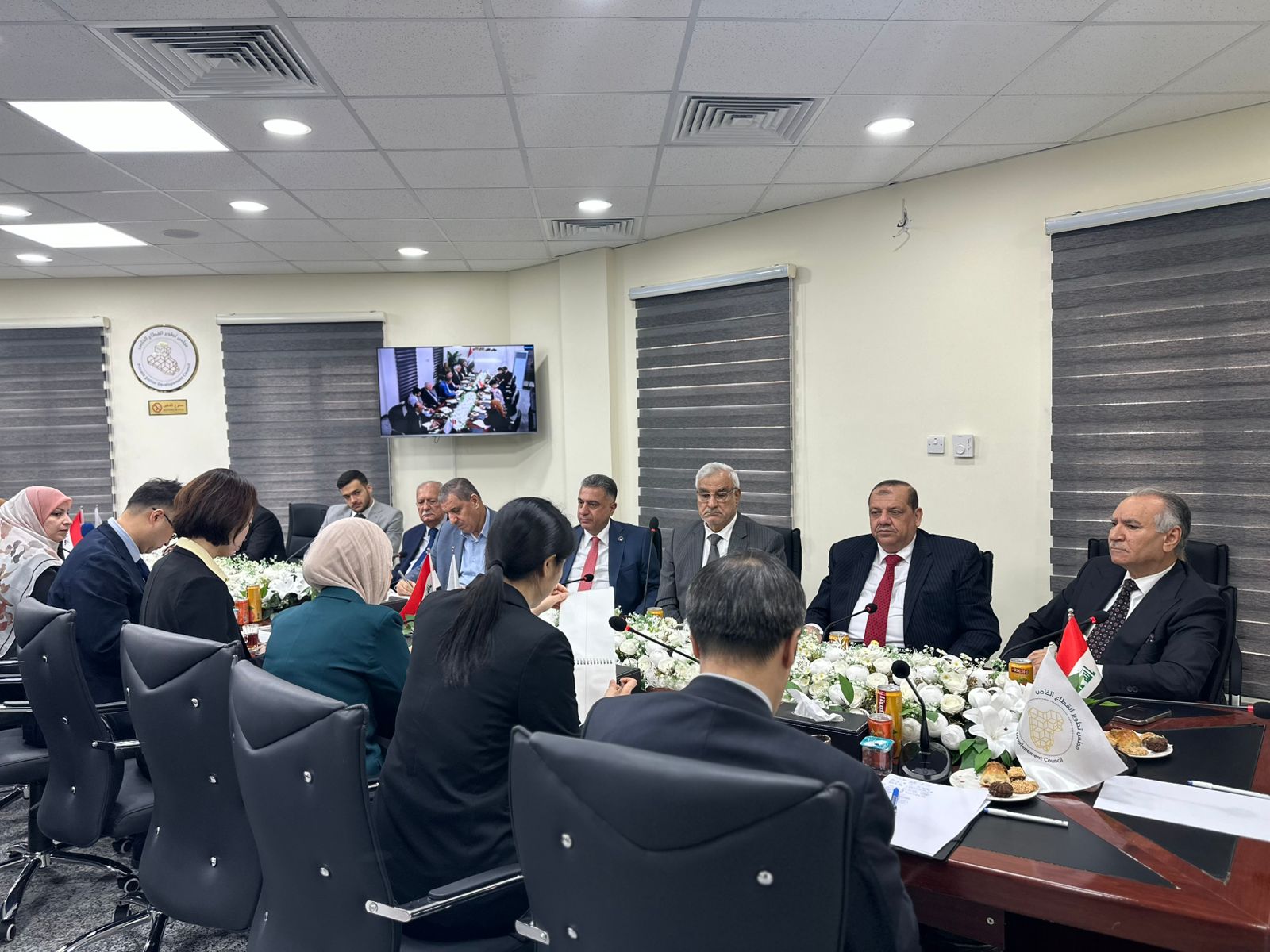
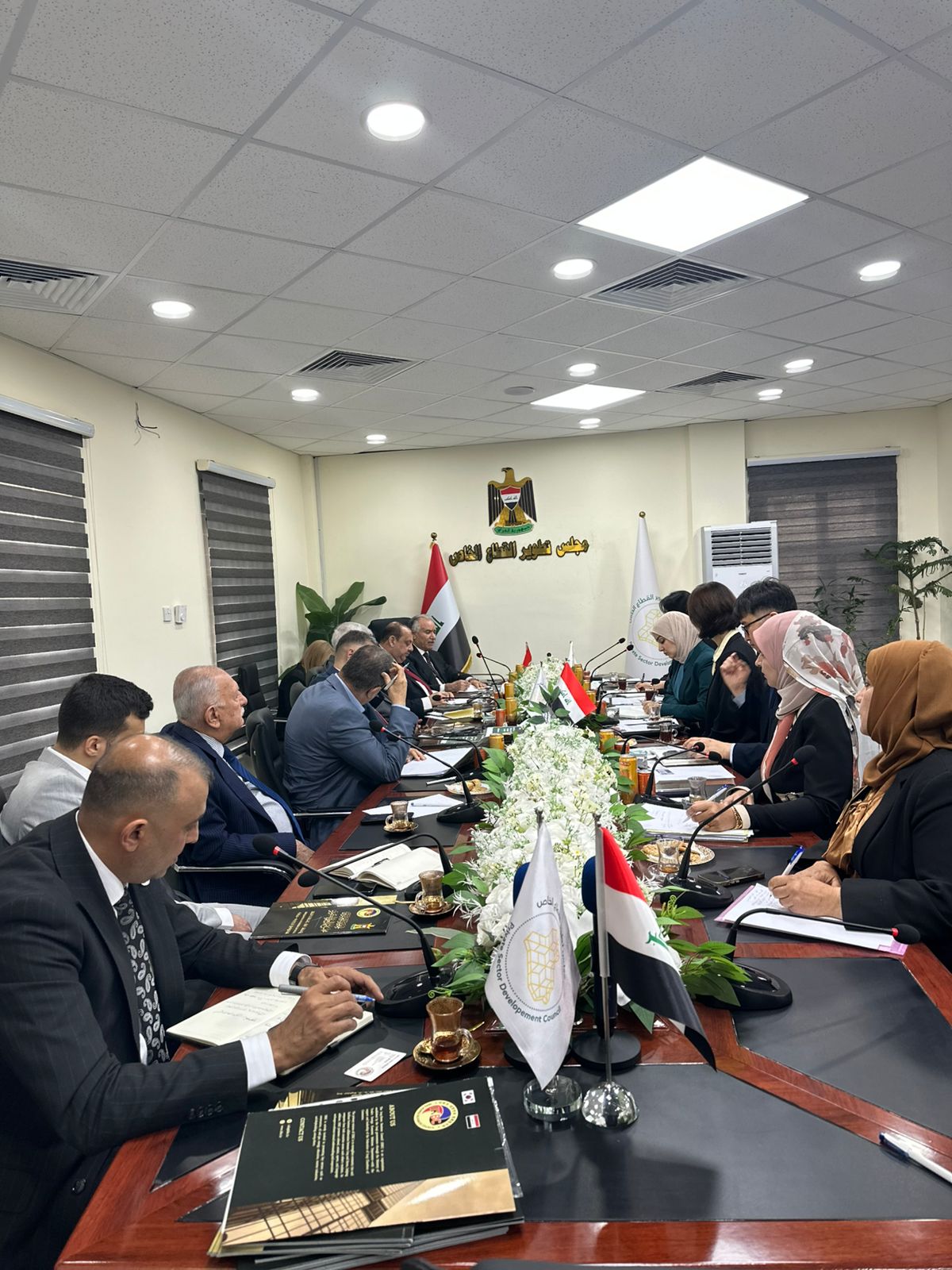
The Iraq–Korea Business Council participated in the meeting of the Private Sector Development Council, held at the Council’s headquarters within the Iraqi Ministry of Planning in Baghdad on April 28, 2026, with high-level official attendance from both the Iraqi and Korean sides.
The meeting was chaired from the Iraqi side by Mr. Abdullah Al-Jubouri, Deputy Chairman of the Private Sector Development Council, with the participation of members of the Council’s administrative and general bodies. The Iraq–Korea Business Council was represented by its Chairman, Mr. Ahmed Shaban.
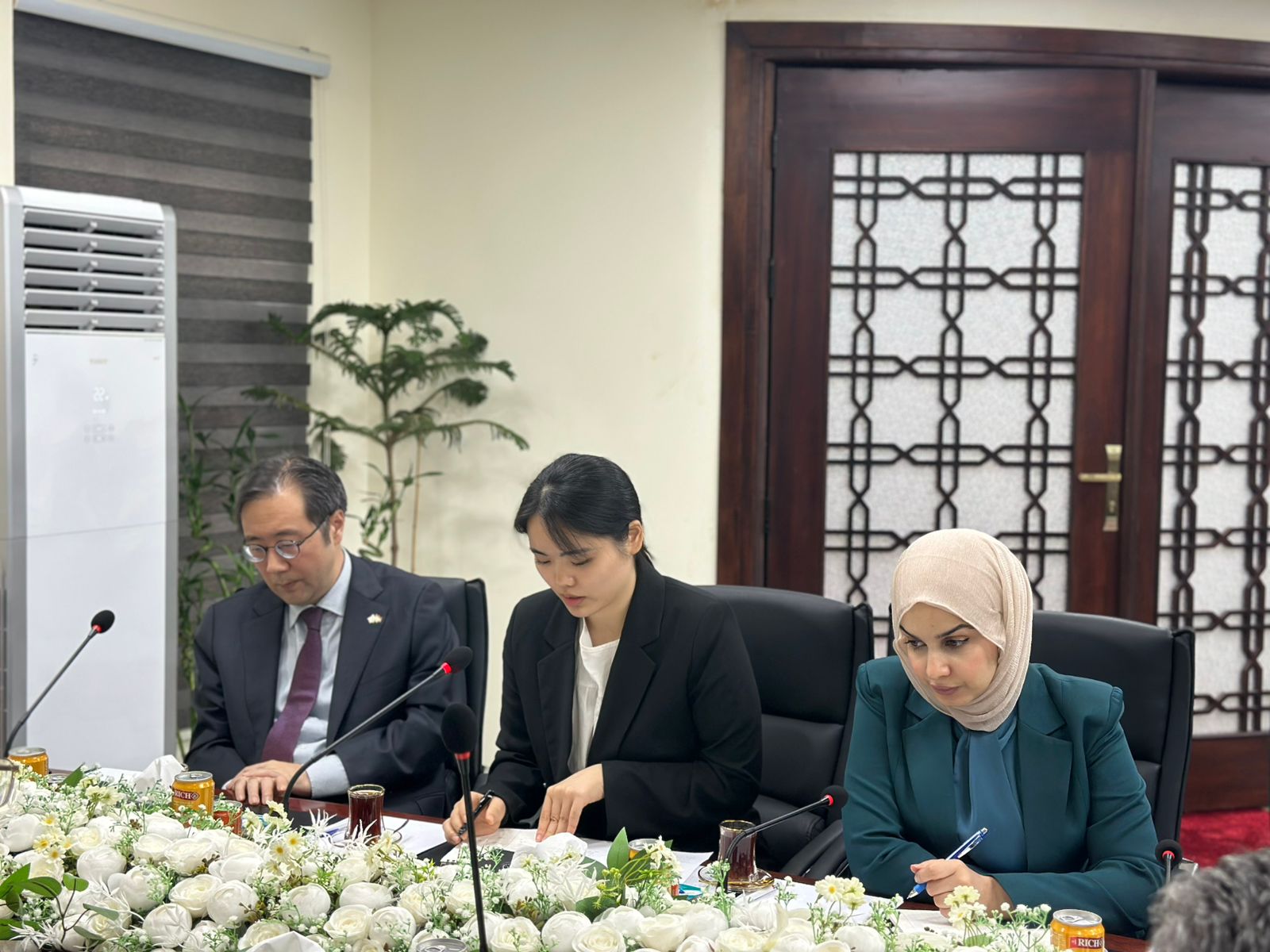
From the Korean side, H.E. the Ambassador of the Republic of Korea to Iraq, Mr. Lee Junil, attended the meeting, accompanied by First Secretary Ms. Choi Shin-Hye, Commercial Attaché Mr. Dong Joon Cho, and an official delegation, underscoring the importance of this meeting in strengthening bilateral relations between the two countries.
The meeting discussed prospects for economic and trade cooperation between Iraq and the Republic of Korea, focusing on developing strategic partnerships, supporting the investment environment, and opening new avenues for cooperation across key sectors.
The Private Sector Development Council in Iraq is considered a high-level national body dedicated to strengthening the role of the private sector and enabling it to serve as a key partner in economic development. The Council comprises leading business figures alongside representatives from relevant government entities, including economic ministries, investment bodies, and financial institutions. It works to shape policies and directions aimed at improving the business environment in Iraq through proposing economic reforms, addressing challenges facing the private sector, and contributing to the modernization of legislation and regulatory frameworks in line with market needs. The Council also seeks to enhance public-private partnerships, promote both domestic and foreign investment, and diversify national income sources beyond oil dependency. Furthermore, it plays a key coordinating role in supporting economic initiatives, promoting trade, and expanding cooperation with international partners, serving as a platform for dialogue and integration between decision-makers and the private sector to achieve sustainable economic growth and job creation.
During the meeting, Mr. Abdullah Al-Jubouri delivered a brief presentation to the Korean delegation on the Council’s mission, vision, and sectors. He noted that the Council includes prominent business leaders and well-established economic figures, in addition to strong government representation comprising advisors, deputy ministers, representatives of the National Investment Commission, the Central Bank of Iraq, state-owned banks, heads of major federations such as the Chambers of Commerce, Contractors, and Industries, as well as advisors to the Prime Minister for economic affairs. Accordingly, the Council represents the highest body representing the private sector in Iraq.
Mr. Al-Jubouri further emphasized that the Council’s vision, approved by the Council and currently pending endorsement by the Council of Ministers under the (2026–2036) framework, represents a comprehensive guiding reference for government entities to regulate and direct economic policies and activities. He noted that the vision focuses on enhancing the performance of the private sector and enabling it to fully contribute to driving the Iraqi economy, moving away from the current oil-dependent economic model. He stressed that the Council plays a central role in supporting efforts to expand trade exchange with countries worldwide, particularly the Republic of Korea.
He also highlighted that the Council contributes to alleviating the impact of certain regulatory decisions that may at times place burdens on the private sector, noting that efforts are underway to revise such measures. He further expressed aspirations to amend the Commercial Agencies Law in favor of Iraqi partners and proposed organizing an Iraqi–Korean business forum, either in Baghdad or in Korea, with the support of the Iraq–Korea Business Council, to bring together companies and business leaders from both countries.
For his part, H.E. Ambassador Lee Jong-il reaffirmed the depth of the strategic partnership between Iraq and the Republic of Korea, noting that Korea represents an ideal partner for Iraq across various economic sectors. He highlighted the strong presence of major Korean companies operating in Iraq, including Daewoo, Hyundai, Hanwha, and Samsung, reflecting the level of mutual trust between the two sides.
He also pointed to promising opportunities for Iraq to diversify its economy, achieve sustainable growth, and reduce reliance on oil by strengthening the role of the private sector, advancing industrial development, and expanding trade exchange, including increasing imports of Korean products.
The Ambassador further referred to Korea’s development experience, noting that the country had previously faced similar challenges, including electricity shortages, but successfully overcame them through comprehensive reforms, particularly in tax policies and systems. He emphasized that Korea now possesses advanced expertise that could support Iraq’s economic reform efforts.
In his remarks, Mr. Ahmed Shaban, Chairman of the Iraq–Korea Business Council, emphasized that cooperation between Iraq and the Republic of Korea is built on over two decades of successful and cumulative experiences, contributing to major project implementation and strengthening mutual trust. He noted that this success encouraged the Iraqi government to enhance partnerships with the private sector and establish specialized business councils to promote trade and economic exchange.
He added that the Iraq–Korea Business Council was established pursuant to a ministerial order issued by the Iraqi Ministry of Trade, in accordance with the Iraqi Chambers of Commerce Law No. 43 of 1989 (as amended), making it an official economic entity within the formal institutional framework. The Council serves as an effective platform to connect business communities in both countries, facilitate cooperation between companies, and establish direct communication channels with relevant government entities.
Mr. Shaban further noted that the Council witnessed significant activity over the past year, including a series of meetings in Iraq, as well as an official visit to the Republic of Korea at the end of last year to participate in “KORMARINE 2025” in Busan, one of the leading international maritime industry exhibitions. The Council had an active presence at the event, with Iraq represented by Al-Zaman Shipbuilding Company, contributing to enhancing partnership opportunities and showcasing Iraq’s investment potential.
With the support of the Korea Trade-Investment Promotion Agency (KOTRA), this participation resulted in tangible outcomes, including the recognition of the Iraq–Korea Business Council during the exhibition and the signing of several Memoranda of Understanding with reputable Korean companies, paving the way for their entry into the Iraqi market and investment in strategic sectors such as specialized marine industries, oil and gas, energy, healthcare, and other promising fields.
He also referred to the upcoming Iraq–Korea Joint Committee meeting scheduled for June, noting that the Iraqi Ministry of Trade – Department of Foreign Economic Relations – has invited ministries and the Council to submit proposals for discussion. He confirmed that the Council has prepared a comprehensive work program to be presented during the meeting.
Mr. Mohammed Sadiq Al-Her, Secretary-General of the Private Sector Development Council, highlighted the depth of relations with the Korean side and noted the Council’s intention to expand its international engagement, beginning with the Korean Embassy. He emphasized the Council’s openness to cooperation across all sectors, representing nineteen sectors and hundreds of leading business figures, and its readiness to enhance trade relations between the two countries.
Council member Mr. Baqir Al-Mashat emphasized the importance of coordinating with the commercial section of the Korean Embassy to identify Korean companies interested in entering the Iraqi market and forming partnerships with the Iraqi private sector. He also highlighted opportunities for agency agreements, local manufacturing, and technology transfer.
He further noted that the Iraqi government has issued sovereign guarantees to support private sector cooperation and industrial development, enabling collaboration with Korean banks to finance industrial projects, establish correspondent banking relations, and facilitate letters of credit.
Mr. Haider Al-Rubaie, Chairman of the Iraqi–Chinese Friendship Association, emphasized the importance of enhancing cultural exchange between peoples, including increasing awareness of Korean culture. He highlighted the growing Iraqi interest in Korean arts, fashion, cuisine, and sports, stressing the importance of people-to-people diplomacy in strengthening mutual understanding and calling for expanded cultural initiatives.
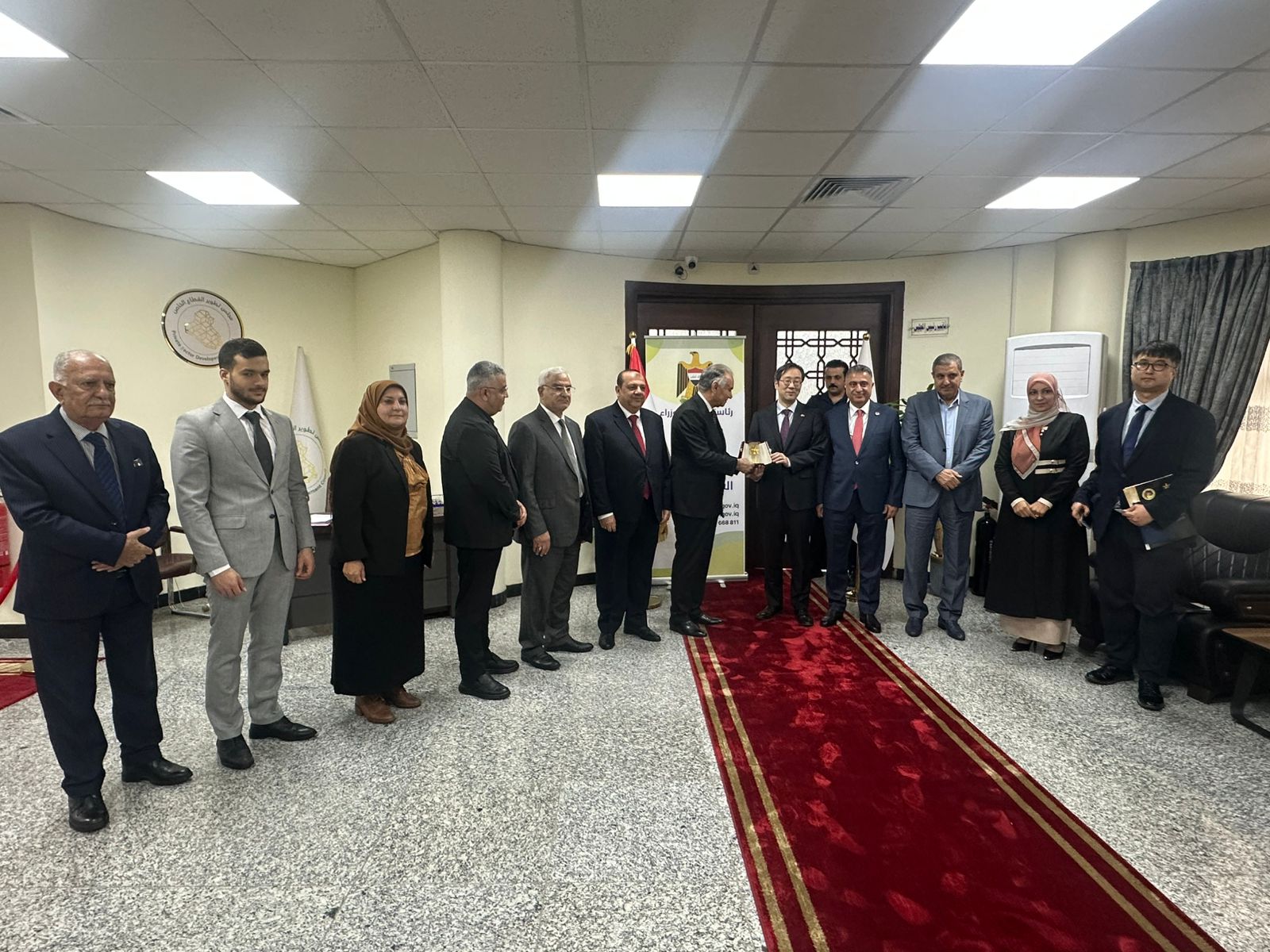
At the conclusion of the meeting, H.E. the Korean Ambassador expressed his sincere appreciation to the Private Sector Development Council and its members for their warm reception and excellent organization. He reaffirmed the importance of continued dialogue and coordination to strengthen cooperation across various fields.
On this occasion, Mr. Abdullah Al-Jubouri presented a symbolic gift to H.E. the Ambassador as a gesture of appreciation, reflecting the depth of bilateral relations and the shared commitment to further strengthening them