February 14, 2025
IKBC at the 49th Baghdad International Fair & Associated Business Forums
IKBC Participation at the 49th Baghdad International Fair and Associated Business Forums
Day One
On the first day of the event, the IKBC delegation, led by its Chairman, Mr Ahmed Shaban, was invited by the Iraqi Minister of Commerce, Dr Ather Dawoud Al-Ghariri, to attend the opening of the 49th Baghdad International Fair. The Minister officially inaugurated the fair, marking a significant milestone for international trade and cooperation in Iraq.
Mr Shaban participated in the opening ceremony and related high-level engagements as part of the International Business Forum, held in parallel with the Fair. The ceremony was also attended by the Iraqi Minister of Oil, Mr Hayyan Abdul Ghani, alongside senior representatives from major oil and gas companies, underscoring the strategic importance of the event for Iraq’s energy, industrial, and infrastructure sectors.
The scale and diversity of participation at the 49th Baghdad International Fair—with a wide range of international, regional, and local companies in attendance—sent a strong and positive signal to the global business community. It demonstrated that Iraq continues to offer a stable and secure environment for companies to operate, invest, and expand, reinforcing confidence in the country’s economic recovery and long-term development trajectory. The presence of the IKBC Chairman, Mr Shaban, demonstrates leadership in facilitating Korean companies’ entry into the Iraqi market and, in turn, providing market access and guidance. IKBC’s presence is critical to raising awareness in the Iraqi market and demonstrating the two countries’ collaboration.
IKBC proudly served as a Gold Sponsor of the event, reaffirming its commitment to supporting Iraq’s economic development, international engagement, and private-sector growth. The opening ceremony was further distinguished by the attendance of several Arab and regional ambassadors representing participating countries. Their presence and support are critical to encouraging their national companies to enter the Iraqi market, thereby opening new avenues for investment, trade, and cross-border partnerships.
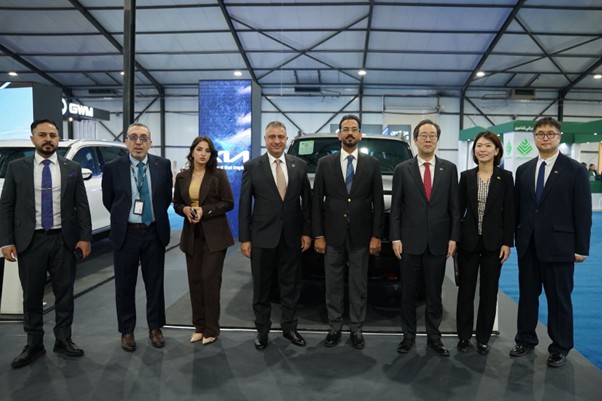
During the ceremony, IKBC and the chairman, Mr Ahmed Shaban, engaged with representatives of the Embassy of the Republic of Korea, including H.E. Ambassador Mr Lee Jun-il and Mr Dong-Joon Cho, Commercial Attaché at the Korea Trade-Investment Promotion Agency (KOTRA). Discussions focused on future collaboration between the Iraq–Korea Business Council (IKBC) and international exhibitions and business forums to enhance market access and create new opportunities for Korean companies seeking to operate in Iraq. These initiatives are expected to further strengthen bilateral economic relations and deepen private-sector engagement.
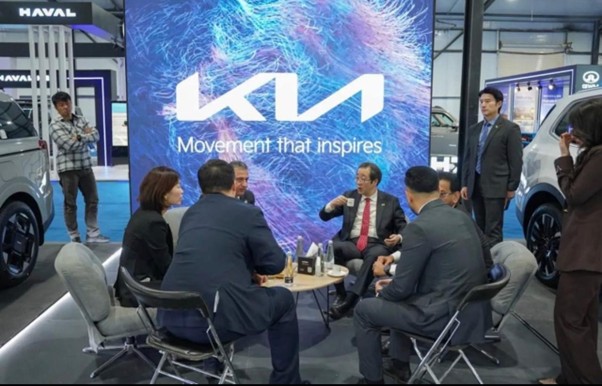
Following the opening ceremony, Mr Ahmed Shaban visited the Kia Motors booth together with the Korean Embassy delegation. The visit aimed to support Kia’s presence and expansion in the Iraqi market. During the visit, the delegation met with Mr Hashim Almosafar to discuss market development strategies, brand growth, and Kia’s role in Iraq’s automotive sector. The discussions also highlighted Mr Ahmed Shaban’s continued support for South Korean companies operating in Iraq through the IKBC, emphasising cooperation, market facilitation, and the development of long-term strategic partnerships.
Day Two – First Session
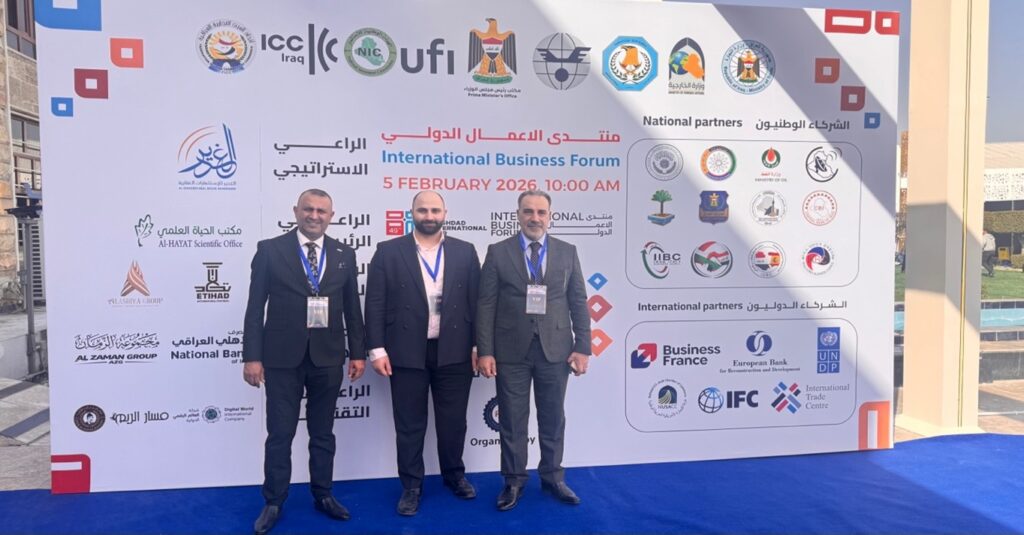
On the second day of the event, the IKBC delegation, led by its senior representatives, attended a series of ICC Iraq events as VIP guests, underscoring IKBC’s growing stature within Iraq’s business and investment landscape. The delegation also actively participated in the Iraq–Germany Business Forum, a strategic platform that advances economic, industrial, and financial cooperation between Iraq and Germany.
IKBC’s presence alongside other prominent committees and institutions in Iraq served not only as participation but as a deliberate effort to raise awareness of the Council’s role, objectives, and long-term vision. By engaging at this level, IKBC demonstrated its commitment to building a strong institutional understanding of how it will actively contribute to Iraq’s economic development framework. The visible and coordinated presence of IKBC among key stakeholders reinforced its seriousness of purpose and strategic positioning within the broader business ecosystem.
During the forum, senior IKBC representatives held high-level discussions with Ms Eva Steinhaus, Regional Representative of the German Export Credit Agency. The meetings focused on enhancing collaboration between IKBC and German companies operating in Iraq, with particular emphasis on advanced technologies, specialised industrial expertise, and structured mechanisms for knowledge and technology transfer. These elements were identified as critical drivers for supporting Iraq’s long-term industrial modernisation and sustainable economic growth.
German representatives expressed strong appreciation for IKBC’s engagement and forward-looking approach, recognising its potential to facilitate cross-border partnerships and structured cooperation. Particular attention was given to the shipbuilding sector, which is strategically important for Iraq’s economic diversification, infrastructure renewal, and maritime capacity development. Discussions highlighted the importance of fostering sustainable partnerships between Iraqi and German entities to strengthen local capabilities, enhance industrial resilience, and ensure the successful execution of large-scale projects.
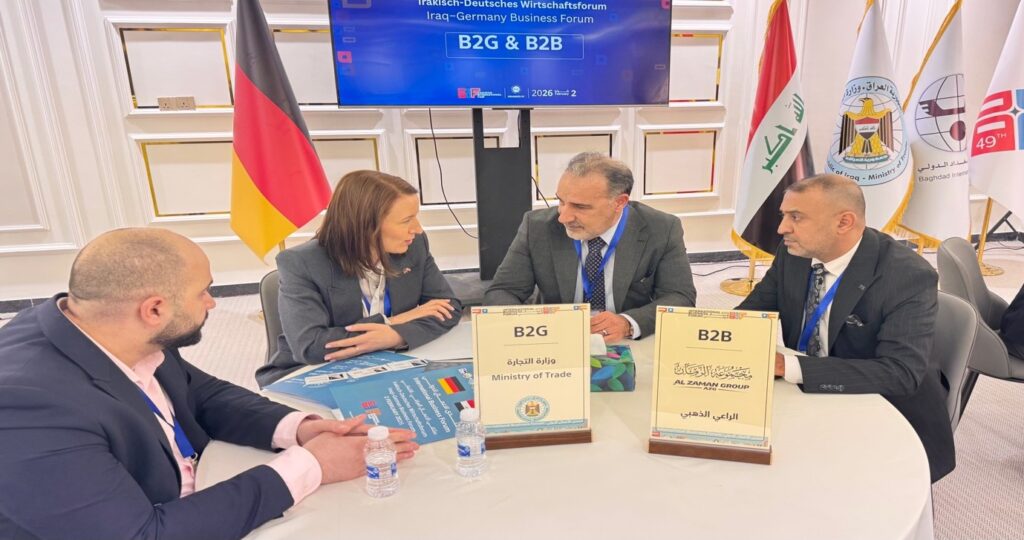
In addition, IKBC representatives met with Mr Benedikt Beergjurgen, Relationship Manager at DZ Bank Middle East, representing participating financial institutions. The meeting explored opportunities for collaboration in IKBC and related industrial sectors, with a focus on tailored financing structures designed to support complex infrastructure projects.
Notably, IKBC’s strong presence throughout the forum generated significant interest among Iraqi and international business leaders. Numerous business leaders expressed interest in joining IKBC, recognising the Council’s active engagement, credibility, and strategic vision. This response further confirms that IKBC’s visible participation is pivotal in strengthening its network, expanding its membership base, and reinforcing its influence in Iraq’s evolving economic landscape.
Day Two – Second Session
In the evening, the IKBC delegation attended the Iraq–Uzbekistan Business Forum, which commenced with a welcoming address by Mr Malik Al Duraie, Director General of the Private Sector Development Department at the Iraqi Ministry of Trade. In his remarks, Mr Al Duraie highlighted the strategic importance of strengthening bilateral economic relations between Iraq and Uzbekistan and reaffirmed the Iraqi government’s commitment to facilitating private-sector partnerships and encouraging cross-border investment.
Throughout the forum, Uzbek business leaders and representatives of the Uzbek Embassy expressed strong interest in entering the Iraqi market, particularly in sectors aligned with Iraq’s national development priorities. Discussions focused on opportunities for cooperation in industrial production, infrastructure development, and the transfer of modern technologies and technical expertise. Uzbek representatives underscored their readiness to share industrial experience and operational capabilities to enhance local production capacity and contribute to sustainable economic growth in Iraq.
IKBC’s participation in the forum reinforced its role as an active platform for fostering international business engagement and facilitating structured dialogue between Iraqi and foreign stakeholders. The event provided a valuable opportunity to expand IKBC’s network, strengthen institutional relationships, and demonstrate its commitment to supporting trade diversification and strategic partnerships.
The discussions reflected growing confidence in Iraq’s evolving business environment and highlighted the importance of international collaboration in advancing technology transfer, attracting investment, and enabling private–sector–driven economic development.
Day Three – First Session
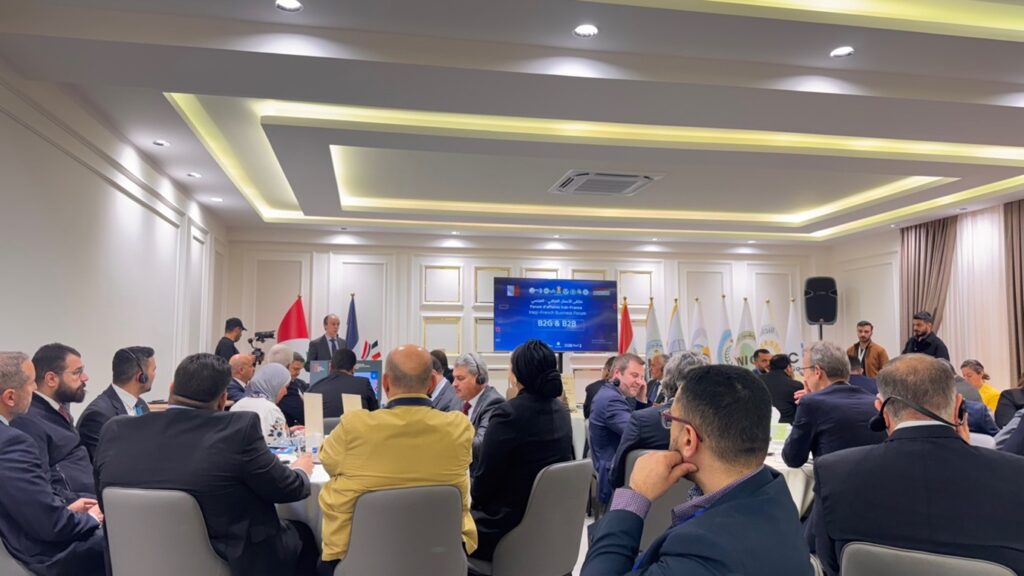
The forum opened with welcoming remarks from Mr Botan Dizayee, Head of the Economic Department at the Iraqi Ministry of Foreign Affairs, who warmly received the French diplomats and business representatives participating in the event. In his address, Mr Dizayee noted that trade between Iraq and France has grown steadily in recent years, reflecting the resilience and maturity of bilateral relations. He highlighted the active involvement of French companies across several strategic sectors in Iraq, including energy, oil and gas services, infrastructure, transportation, construction, water management, healthcare, telecommunications, and industrial manufacturing. He also called for expanding cooperation into additional priority areas, such as shipbuilding, logistics, renewable energy, and advanced industrial technologies, emphasising that Iraq offers regulatory frameworks, investment incentives, and partnership structures that international companies can leverage effectively.
Mr Laurent Estrade, Head of the Economic Department at the French Embassy in Baghdad, followed with remarks reflecting on his personal experience living and working in Iraq. He noted the significant progress achieved since 2003, particularly in stability, security, and institutional capacity. He encouraged French companies to enter the Iraqi market through joint ventures with credible local partners and invited Iraqi entities to engage directly with French manufacturers. Mr Estrade underlined that French industrial firms are prepared to support Iraqi partners across the full value chain—from feasibility studies and design to production, financing, and implementation.
He further highlighted the increasing level of French investment in Iraq, supported by the sovereign guarantee framework agreed upon between the Iraqi and French governments. According to Mr Estrade, this framework has substantially improved project bankability, reduced investment risk exposure, and facilitated stronger cooperation among French companies, financial institutions, and Iraqi public- and private-sector stakeholders. Senior Iraqi government officials attended the forum to demonstrate institutional support for these partnerships and to promote enhanced trade and investment engagement.
During the forum, Mr Ali Alqwaizi met with Mr François D’Orlando, Deputy Head of the Economic Department at the French Embassy. In the discussion, IKBC’s strategic role in facilitating cooperation between Iraqi and international businesses was highlighted, with a focus on supporting Korean companies entering Iraqi market sectors designated as priority for development. Mr D’Orlando expressed a strong interest in supporting structured collaboration between IKBC members and French companies, particularly in infrastructure and associated industrial services.
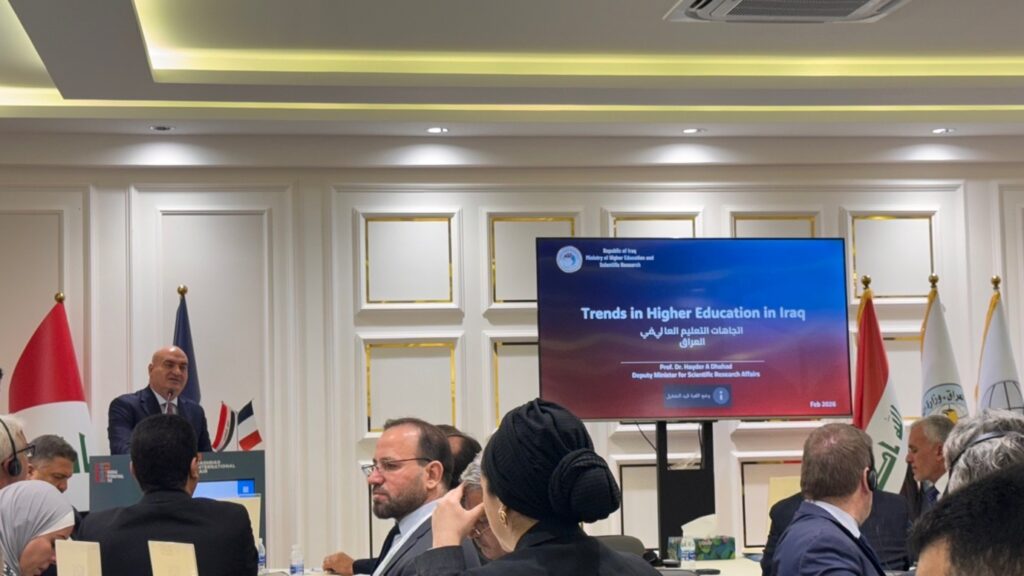
Following a presentation by Prof. Dr Hayder Abed, leaders from Iraq’s higher education sector outlined a comprehensive vision for expanding international academic cooperation and institutional reform. They highlighted established partnerships with leading institutions in the United Kingdom, the United States, and France, including the University of Plymouth, UMBC, and the University of Paris Lorraine. The session also formally announced the adoption of the Bologna Process across Iraqi universities, underscoring Iraq’s commitment to harmonising its higher education framework with European academic standards, enhancing quality assurance mechanisms, and improving global academic mobility.
On the sidelines of the forum, Mr Ali Alqwaizi met with Dr Abed to explore how IKBC can play a constructive role in supporting the development and modernisation of Iraq’s education system. Discussions focused on pedagogical reform, curriculum development, and the integration of applied and industry-oriented teaching methodologies.
Mr Alqwaizi highlighted the strengths of the Korean education model, particularly its emphasis on technical proficiency, STEM integration, research-commercialisation linkages, and strong collaboration between academia and industry. The discussion examined how elements of the Korean teaching system—such as structured practical training, performance-based evaluation frameworks, digital learning integration, and vocational–industrial alignment—could add tangible value to Iraqi institutions. Both parties expressed interest in facilitating knowledge exchange initiatives, academic partnerships, and capacity-building programmes to enhance teaching quality, institutional competitiveness, and graduate employability within Iraq’s higher education sector.
The forum brought together a wide range of French companies operating in energy, transportation, construction, water and environmental services, industrial manufacturing, defence-related industries, and education. Many expressed a strong interest in partnering with Iraqi entities to expand their footprint in the Iraqi market. Representatives of the French Embassy actively facilitated discussions, reaffirming France’s commitment to strengthening economic cooperation, increasing trade volumes, and promoting sustainable, long-term investment in Iraq.
Day Three – Second Session
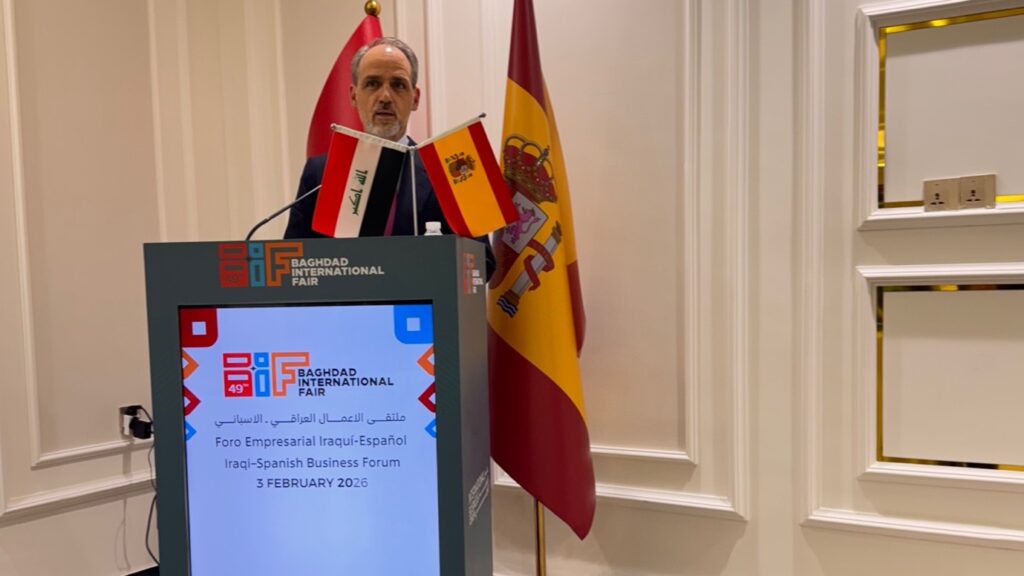
The IKBC delegation, led by its Chairman, Mr Ahmed Shaban, participated in the Iraqi–Spanish Business Forum, a high-level platform aimed at strengthening economic cooperation and promoting trade and investment relations between the Republic of Iraq and the Kingdom of Spain. The forum brought together senior government officials, diplomats, business leaders, and private-sector representatives from both countries, reflecting a shared commitment to advancing structured bilateral economic engagement.
The forum opened with welcoming remarks from Mr Malik Al Duraie, setting a constructive tone for dialogue and collaboration. Mr Botan Dizayee, Head of the Economic Department at the Iraqi Ministry of Foreign Affairs, then extended a warm welcome to the Spanish diplomatic delegation and business representatives. In his address, he reaffirmed Iraq’s commitment to deepening its bilateral relations with Spain and highlighted government initiatives to foster a stable, transparent, and investor-friendly environment. He also underscored the private sector’s growing role as a central driver of economic diversification and sustainable growth.
Mr Isaac Barbero, Chief Economic and Commercial Counsellor at the Spanish Embassy in Baghdad, delivered the keynote address. Drawing on his experience since his first visit to Iraq in 2008, he noted the country’s significant progress in security, infrastructure, institutional capacity, and overall business conditions. Since 2023, he observed consistent improvements during his annual visits, indicating Iraq’s steady transition toward stability and economic growth. Mr Barbero reaffirmed Spain’s historical ties with Iraq and expressed a strong interest in supporting Iraqi partners through long-term collaboration, technology transfer, and sector-specific expertise. He highlighted Spain’s capabilities across industry, agriculture, healthcare, pharmaceuticals, construction, infrastructure, education, vocational training, and defence, reinforcing Spain’s readiness to contribute to Iraq’s reconstruction and development agenda.
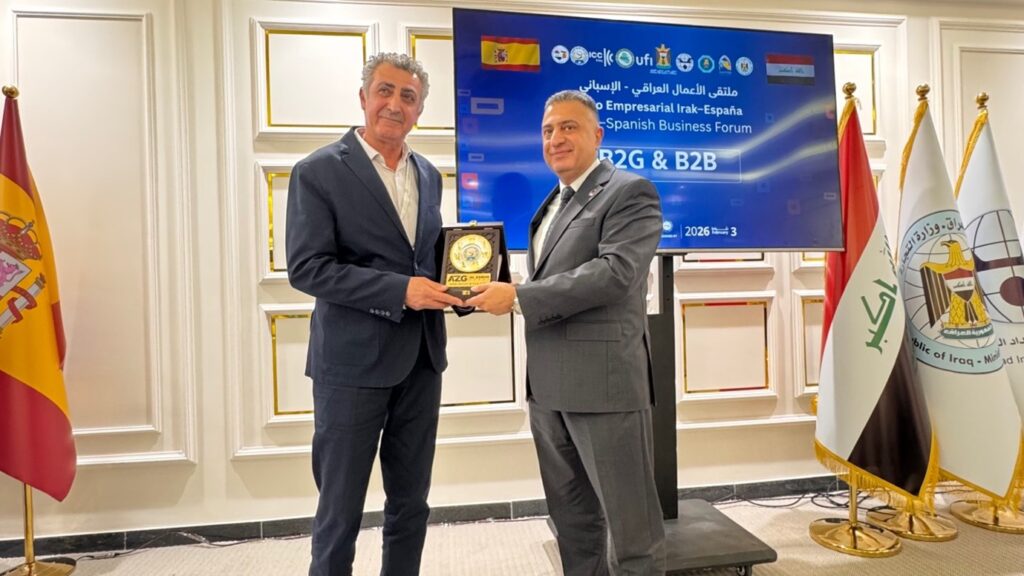
Importantly, Mr Ahmed Shaban’s consistent presence at international business forums during the programme—including Iraqi–German, Iraqi–French, Iraqi–Uzbek, and Iraqi–Spanish engagements—demonstrated IKBC’s active leadership at the highest level. His participation underscored the Council’s institutional seriousness and played a strategic role in raising awareness that IKBC has been formally established as a structured platform for international economic cooperation. The Chairman’s visibility reinforced IKBC’s positioning within Iraq’s business ecosystem and signalled its readiness to engage with global partners.
Following the forum, Mr Ahmed Shaban, Mr Ali Alqwaizi, and Mr Ali Al-Rubaye held a bilateral meeting with Mr Isaac Barbero. During the discussion, Mr Shaban and Mr Al-Rubaye shared insights from their recent visit to Madrid, where they met with several Spanish manufacturers with strong potential for technology transfer and industrial cooperation in Iraq. They highlighted how such partnerships could enhance local value creation, support skills development, and contribute to the modernisation of Iraq’s industrial base. Mr Barbero welcomed this engagement and encouraged further visits to Madrid to expand outreach to additional manufacturers and industrial groups. He expressed full support for facilitating introductions and strengthening institutional coordination to build a sustainable bridge between Spanish and Iraqi businesses. Both sides agreed that enhanced cooperation should be driven by the private sector and supported by effective coordination between the Iraqi and Spanish governments to ensure a long-term economic impact.
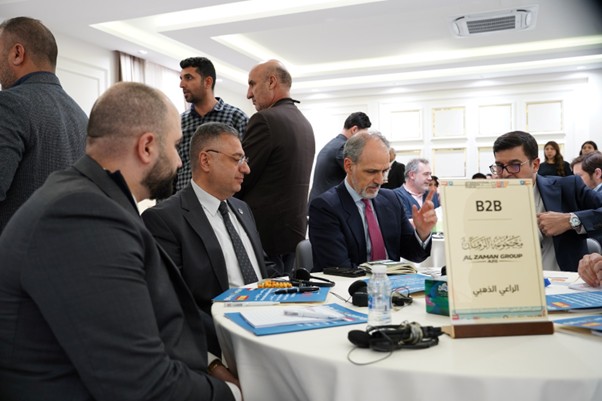
In a separate meeting, Mr Ali Alqwaizi met with Mr Amanch Yajatun Rashid of IMATHIA Construction to explore potential collaboration. Discussions focused on partnerships in major national development initiatives, particularly infrastructure and railway expansion projects. Mr Alqwaizi expressed IKBC’s interest in facilitating constructive dialogue between stakeholders to identify practical cooperation frameworks. Both parties emphasised the importance of aligning technical expertise, financial capacity, and project management capabilities to support Iraq’s strategic infrastructure objectives and agreed to continue discussions to evaluate concrete opportunities for collaboration in forthcoming projects.
Day Four – Session First
On the fourth day of the programme, the IKBC delegation, led by its Chairman, Mr Ahmed Shaban, attended the Iraqi–Bulgarian Business Forum, a key platform for strengthening bilateral trade, investment, and economic cooperation between Iraq and Bulgaria.
The forum opened with remarks from Mr Malik Al Duraie, who highlighted the Iraqi government’s strong support for international companies seeking to enter the Iraqi market. He emphasised that Iraq maintains a solid and growing position in the regional and global economy, is advancing steadily on its reconstruction and development path, and continues to implement structural reforms to attract foreign direct investment. Mr Al Duraie also noted the longstanding and positive relations between Iraq and Bulgaria, with bilateral trade demonstrating steady growth.
Mr Abdulrazzaq Al-Zuheiri, President of the Federation of Iraqi Chambers of Commerce (FICC), delivered welcoming remarks to the Bulgarian diplomatic and business delegation. He expressed optimism regarding sustainable, long-term cooperation between Iraqi and Bulgarian companies and reaffirmed the Federation’s commitment to supporting Iraqi businessmen and strengthening private-sector development. He underscored the Federation’s role as the unified representative of Iraq’s private sector at national and international levels, acting as a principal interlocutor with government institutions, foreign governments, embassies, and international organisations. He further highlighted its function as a bridge between public institutions, local enterprises, and the global business community, contributing to Iraq’s economic integration and trade expansion.
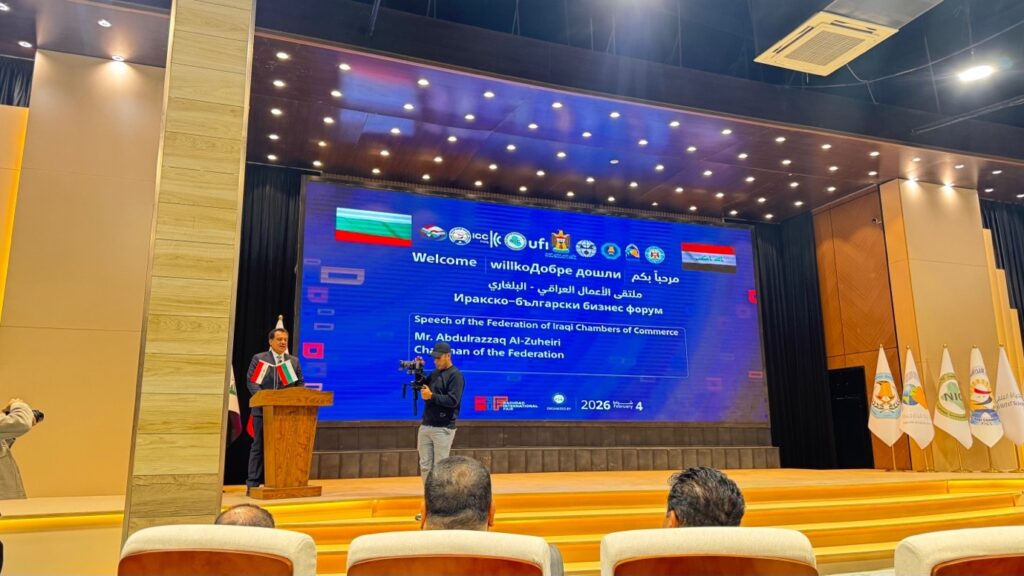
Dr Trifon Iliev, representing the Bulgarian–Iraqi Trade and Economic Council, shared insights from his experience operating in Iraq and expressed a strong interest in expanding cooperation through joint ventures, technology transfer, and structured long-term partnerships. He identified several priority sectors for collaboration, including:
- Agriculture and food industries
- Livestock, fisheries, and irrigation systems
- Mechanical engineering and industrial manufacturing
- Chemicals and pharmaceuticals
- Healthcare services and construction
- Energy, research and development (R&D), and defence-related industries
Dr Iliev emphasised Bulgaria’s readiness to contribute industrial expertise, advanced production technologies, and technical know-how to support Iraq’s economic diversification and sustainable growth objectives.
Dr Munna Aljabri, Advisor to the National Investment Commission (NIC), highlighted major investment opportunities in Iraq’s energy sector, particularly in renewable energy projects such as wind power. She stressed that foreign investment is critical to meeting Iraq’s rising energy demand and to facilitating the country’s transition to cleaner, more sustainable energy systems.
The event concluded with a formal signing ceremony, during which the Chairman of the Iraqi–Bulgarian Business Council signed a Memorandum of Understanding (MOU) with Dr Trifon Iliev, establishing a structured partnership framework between the Business Council and Bulgarian private-sector representatives. The MOU is designed to promote joint ventures, facilitate technology transfer, and expand bilateral trade and investment flows.
The final session of the forum focused on B2B and B2G meetings, enabling direct engagement between private companies and government stakeholders. During this session, Mr Ali Alqwaizi met with Dr Trifon Iliev and formally introduced IKBC, outlining its institutional mandate, strategic vision, and role as a platform for facilitating international business cooperation and industrial partnerships in Iraq.
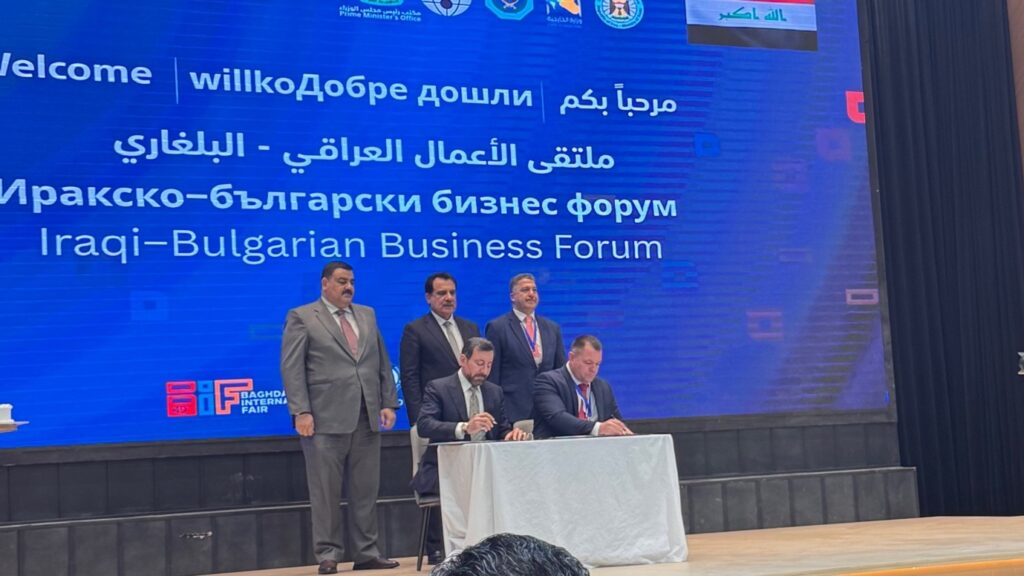
Dr Iliev expressed a strong interest in collaborating with IKBC and confirmed his willingness to support the Council by identifying and connecting it with qualified Bulgarian companies seeking to enter the Iraqi market. He highlighted opportunities for collaboration in sectors where Bulgarian firms can provide specialised technical expertise, industrial equipment, and advanced manufacturing capabilities, particularly through structured joint ventures and technology-transfer mechanisms.
The discussions reflected mutual interest in establishing a long-term, institutionalised framework for cooperation. Importantly, the presence of the IKBC delegation at the Iraqi–Bulgarian Business Forum was instrumental in strengthening ties with other business councils and international trade bodies. By actively participating in such high-level forums, IKBC reinforced its position as an emerging platform for cross-border engagement, expanded its institutional network, and increased awareness of its establishment and mission within the regional and international business community.
Day Four – Second Session
On the fourth day of the programme, the IKBC delegation, led by its Chairman, Mr Ahmed Shaban, attended the Iraqi–Italian Business Forum. The event served as an important platform for reinforcing bilateral trade, investment, and structured economic cooperation between Iraq and Italy.
Mr Abdulrazzaq Al-Zuheiri, President of the Federation of Iraqi Chambers of Commerce (FICC), warmly welcomed the Italian diplomats and business leaders participating in the forum. In his remarks, he highlighted the steady growth in trade between Iraq and Italy in recent years, noting that Italy has become one of Iraq’s principal European trading partners, particularly in energy, infrastructure, construction, industrial machinery, engineering services, and healthcare.
Mr Al-Zuheiri expressed strong optimism regarding the expansion of long-term collaboration between Iraqi and Italian companies and reaffirmed the Federation’s full commitment to supporting Iraqi businessmen and strengthening private-sector development. He emphasised that the Federation acts as the unified representative of Iraq’s private sector at both national and international levels, serving as a key interlocutor with the Iraqi government, foreign governments, embassies, and international organisations. He further underscored its function as a bridge between government institutions, local enterprises, and the global private sector, facilitating trade partnerships, joint ventures, and investment flows that directly contribute to Iraq’s economic development and integration into regional and global markets.
This was followed by a statement from the Iraqi Ministry of Foreign Affairs reaffirming the government’s commitment to supporting private-sector partnerships and encouraging foreign investment engagement.
In her address, Ms Rosamaria Genovese, Director of the Economic and Cooperation Office at the Italian Embassy in Baghdad, reaffirmed the Embassy’s strong commitment to supporting Iraqi companies and facilitating their access to the Italian market. She emphasised the Embassy’s readiness to actively connect Iraqi businesses with Italian counterparts, provide institutional coordination, and assist with regulatory and market-entry processes. Ms Genovese noted that several Italian manufacturers have demonstrated concrete interest in entering the Iraqi market, particularly through joint ventures with established Iraqi partners—reflecting growing confidence in Iraq’s economic environment and long-term potential.
She highlighted Italy’s competitive strengths in sectors strategically relevant to Iraq, including industrial machinery, energy and power systems, infrastructure and construction, oil and gas services, healthcare equipment, agri-industry, and advanced manufacturing technologies. These sectors, she explained, offer substantial opportunities for sustainable and mutually beneficial cooperation.
The Head of the Iraqi–Italian Business Group subsequently outlined the Group’s long-term economic vision, focused on deepening bilateral trade, promoting structured private-sector collaboration, and supporting sustainable investment flows between Iraq and Italy. He announced the forthcoming opening of the Iraqi–Italian Business Council in Baghdad on 22 October 2025, describing it as a significant milestone and a permanent institutional platform to facilitate dialogue, commercial partnerships, and economic engagement.
He also highlighted key achievements, including the signing of Memoranda of Understanding (MoUs) with IEC and ANIMA, as well as high-level coordination meetings with SACE in Rome, the Italian Chamber of Commerce, and other leading Italian financial and economic institutions. These initiatives, he noted, have laid a solid foundation for strengthening trade relations, improving access to export credit and financing mechanisms, and enabling more effective collaboration between Italian and Iraqi companies.
Following the formal session, a B2B and B2G networking segment provided opportunities for direct engagement. During this session, Mr Ahmed Shaban and Mr Ali Alqwaizi met with Ms Rosamaria Genovese. Mr Alqwaizi introduced IKBC, outlining its institutional mandate as a platform designed to facilitate international partnerships, sector-specific collaboration, and technology transfer between Iraqi stakeholders and global counterparts.
He highlighted that IKBC members have recently procured advanced machinery from leading Italian manufacturers, which is being deployed to support projects supplying the Iraqi government. This cooperation demonstrates the tangible industrial linkages already being established between Iraqi and Italian companies. Ms Genovese expressed strong support for IKBC’s engagement and confirmed the Embassy’s willingness to provide assistance where required, including sharing a curated list of Italian manufacturers operating in relevant sectors—particularly those capable of contributing to shipbuilding and related industrial activities.
The presence of the IKBC delegation, led by its Chairman, at the Iraqi–Italian Business Forum underscored the Council’s active engagement with international partners and institutional stakeholders. By participating consistently in high-level international business forums, IKBC continues to strengthen its visibility, expand its cross-border network, and position itself as a structured platform for fostering industrial cooperation, technology transfer, and long-term economic partnerships between Iraq and key global markets.
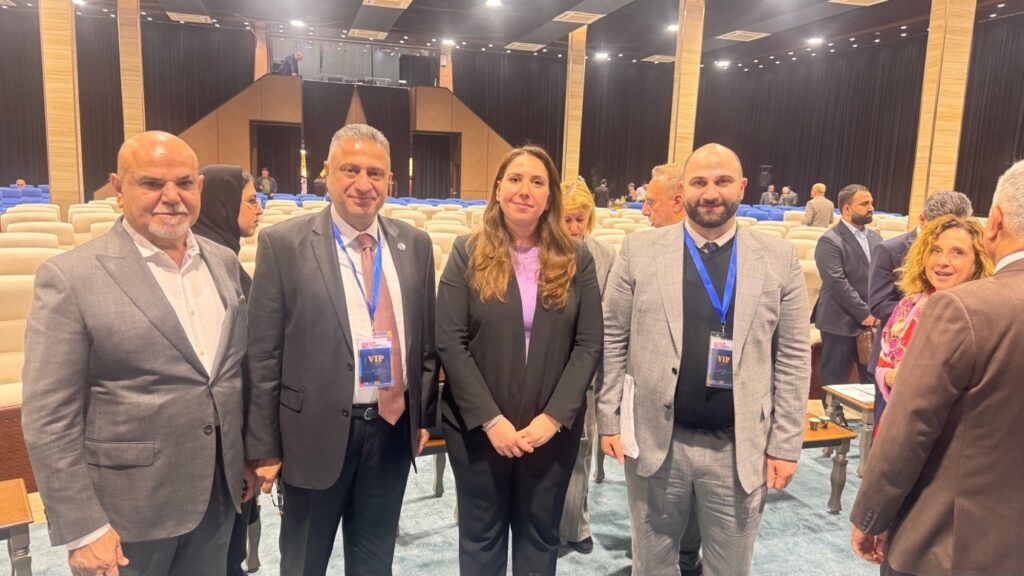
Final Day of the International Business Forum
On the final day of the International Business Forum, the IKBC delegation, led by its Chairman, Mr Ahmed Shaban, actively participated in a comprehensive programme of high-level sessions, panel discussions, and strategic networking engagements that underscored Iraq’s evolving investment climate and increasing international confidence.
The day commenced with remarks by Dr Ali Ruzouqi Al-Lami, Deputy Director of the Office of the Prime Minister, who expressed pride in Iraq’s success in attracting international companies to the Baghdad International Fair and the International Business Forum. He emphasised the government’s strategic vision to institutionalise these events annually and develop them into globally recognised platforms that expand in scale, participation, and economic impact.
Dr Al-Lami conveyed the Prime Minister’s vision of sustained partnership between the government and the private sector, stressing that national economic advancement depends on empowering private enterprises to collaborate with international manufacturers and investors. He reaffirmed the government’s commitment to providing comprehensive support to the private sector, including regulatory facilitation, streamlined approvals, and administrative coordination to enable joint ventures and manufacturing partnerships. He further highlighted that foreign investment inflows have increased steadily since 2023, reinforcing Iraq’s position as a stable and increasingly competitive investment destination.
This was followed by a detailed presentation from Dr Haider Makkiyah, President of the National Investment Commission (NIC), who outlined Iraq’s investment performance and pipeline of strategic opportunities. Dr Makkiyah reported that total investment in Iraq has reached approximately USD 104 billion, comprising USD 67 billion in foreign direct investment and USD 37 billion in domestic investment, across multiple priority sectors. He noted that these investments have contributed significantly to economic growth and employment generation.
Dr Makkiyah also presented several flagship projects to the forum. Among them was a national fibre-optic cable project, which attracted strong interest due to its relevance to digital infrastructure development and economic modernisation. He further highlighted silicon production projects in Najaf as strategic industrial opportunities, particularly given the rising global demand driven by advanced technologies, artificial intelligence applications, and high-tech manufacturing.
Panel Discussions and Institutional Engagement
The Forum subsequently hosted its first panel discussion, bringing together senior representatives from key government, regulatory, and financial institutions to provide practical insights into the operational realities of doing business in Iraq. Panellists included:
- Ms Nadia Sadiq Iman, Head of the Foreign Companies Registration Department
- Ms Nagham Abbas, Head of the Large Taxpayers Department
- Mr Haider Mahmoud, Director of Anti–Money Laundering Reporting, Trade Bank of Iraq (TBI)
- Mr Ahmed Dawood, Head of the Transfers Department, Central Bank of Iraq (CBI)
- Eng. Mohsen Al-Alhamid, Chairman, ICC Iraq
- Dr Mohammed Al-Sayed, Director General, Regional and Local Development Directorate
- Dr Thamer Qasim, Director, Iraqi General Authority of Customs
The session was moderated by Mr Khalid Al-Jabri, Chairman of the Osoul Foundation for Economic and Sustainable Development.
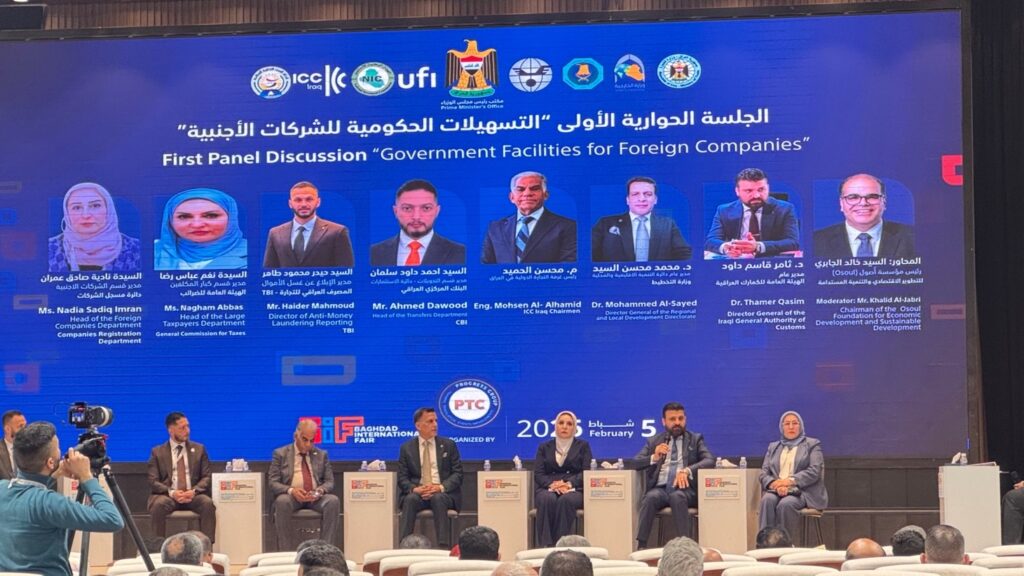
The panel delivered an in-depth discussion covering trade procedures, investment licensing frameworks, customs clearance mechanisms, company registration requirements, and financial compliance regulations. Speakers provided structured, step-by-step clarification of government processes and highlighted Iraq’s ongoing digital transformation initiatives to simplify administrative procedures, enhance transparency, and improve accessibility for both domestic and international investors.
The active participation of the IKBC delegation, led by its chairman, in these high-level sessions further reinforced the Council’s engagement with Iraq’s institutional landscape and its commitment to aligning with national investment frameworks, regulatory reforms, and international best practices in economic cooperation.
The panel delivered an in-depth discussion on trade procedures, investment frameworks, customs clearance, company registration, and financial compliance. Speakers provided step-by-step guidance on government processes and highlighted Iraq’s ongoing digital transformation, aimed at simplifying procedures and improving accessibility for both the public and private sectors.
B2B and B2G Networking Sessions
Following the panel discussions, the Forum organised structured B2B and B2G networking sessions to enable targeted engagement and advance practical cooperation frameworks.
- Meeting with IFC (World Bank Group):
Mr Ali Alqwaizi met with Mr Mohammed Almsari, Associate at the International Finance Corporation (IFC), a member of the World Bank Group. During the meeting, Mr Alqwaizi introduced IKBC, outlining its institutional mandate and its role in facilitating cross-border industrial partnerships. Discussions explored potential avenues for cooperation, including support mechanisms for large-scale shipbuilding and industrial projects undertaken by IKBC members. Particular attention was given to long-term financing structures, private-sector investment mobilisation, and the potential role of development finance institutions in supporting capital-intensive maritime and infrastructure initiatives. - Meeting with the Embassy of the Republic of Korea:
Mr Ahmed Shaban, Chairman of IKBC, and Mr Ali Alqwaizi met with Mr Dong-Joon Cho, Commercial Attaché at the Embassy of the Republic of Korea. The discussion focused on strengthening institutional coordination between IKBC, the Korean Embassy, and KOTRA. Emphasis was placed on enhancing IKBC’s visibility at international exhibitions and business forums, expanding participation in bilateral conferences, and developing structured cooperation mechanisms to deepen Iraq–Korea economic engagement.
These networking sessions further demonstrated IKBC’s active role in building strategic institutional relationships, mobilising international financial and diplomatic support, and positioning the Council as a structured platform for advancing bilateral and multilateral business cooperation.
Mr Lindström expressed a strong interest in IKBC’s initiatives and confirmed his willingness to provide institutional support, including facilitating direct engagement with Swedish companies operating in the relevant industry. He highlighted the potential for structured collaboration between Swedish technical expertise and Iraqi industrial partners through coordinated embassy support and private-sector linkages.
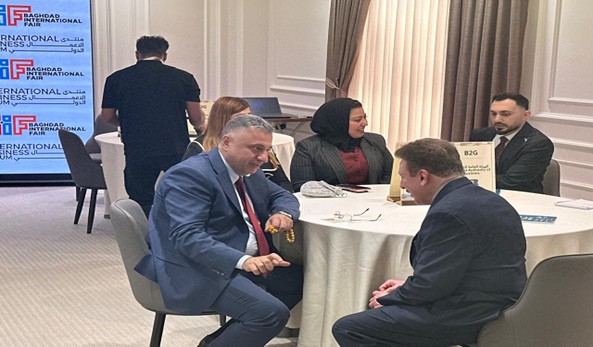
Meeting with NUSACC:
Mr Ahmed Shaban, Chairman of IKBC, and Mr Ali Alqwaizi met with Mr David Hamod, President and CEO of the National U.S.–Arab Chamber of Commerce (NUSACC). During the meeting, Mr Alqwaizi introduced IKBC as a strategic business council in Iraq supporting the development of Iraq’s business sector and broader industrial cooperation initiatives. He outlined the Council’s vision to facilitate sector transformation through international partnerships, technology transfer, and structured investment frameworks.
Mr Hamod expressed strong admiration for IKBC’s strategic direction and conveyed his full support for future collaboration. He confirmed his willingness to facilitate engagement with U.S.–Arab chambers, American industry networks, and relevant institutional stakeholders to strengthen bilateral commercial ties and expand opportunities for cooperation.
Meeting with EBRD:
The delegation also met with Ms Caterina Björlin, Head of Iraq at the European Bank for Reconstruction and Development (EBRD). Ms Björlin expressed interest in supporting investment initiatives linked to Iraq’s shipbuilding and maritime infrastructure sectors, recognising their strategic relevance to the Development Road Project and Iraq’s broader economic diversification agenda.
Several potential projects were discussed, and Ms Björlin confirmed EBRD’s interest in exploring participation through structured financing and investment mechanisms, subject to project feasibility and alignment with the Bank’s mandate.
Second Panel: From Investment Opportunity to Execution
The second panel discussion focused on the transition from investment opportunity to execution, partnerships, and multilateral financing. Speakers included:
- Mr. Ayoub Sami, Investment Officer, IFC
- Dr. Yama Torrabi, Chief Technical Adviser & Project Manager – Anti-Corruption, UNDP
- Ms. Devika Rajiv, Senior Programme Officer, Trade Policy, ITC
- Mr. Axel Baroux, French Trade & Invest Commissioner, Business France
- Ms. Caterina Hansen, Head of EBRD Iraq
- Dr. David Hamod, Chairman of the Board, NUSACC
- Mr. Tharwat Akram, Deputy Director General, Foreign Economic Relations
- Dr. Mudher Mohammed, Financial Adviser to the Prime Minister
The session was moderated by Mr. Mohammed Al-Issa, Business Development Manager at ICC Iraq.
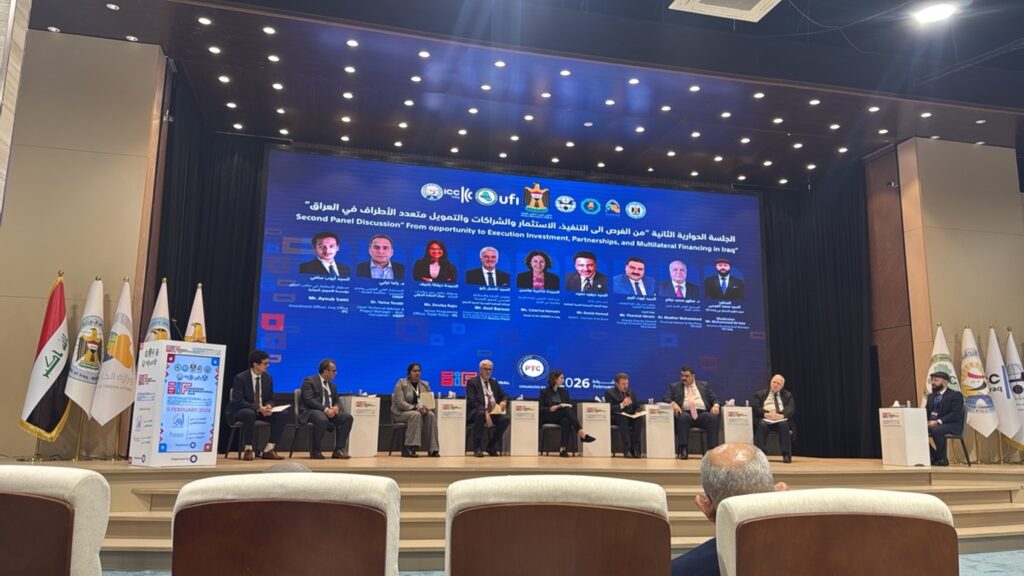
The panel examined the state’s role in structuring foreign investment frameworks, mechanisms to attract international investors, and Iraq’s measurable progress in strengthening transparency and combating corruption. Speakers noted that these institutional reforms have significantly enhanced investor confidence and contributed to increased levels of foreign participation across key sectors. They also highlighted the growing presence of highly skilled foreign professionals in Iraq, particularly in information technology, hospitality, manufacturing, and financial services, reflecting a more open and internationally integrated business environment.
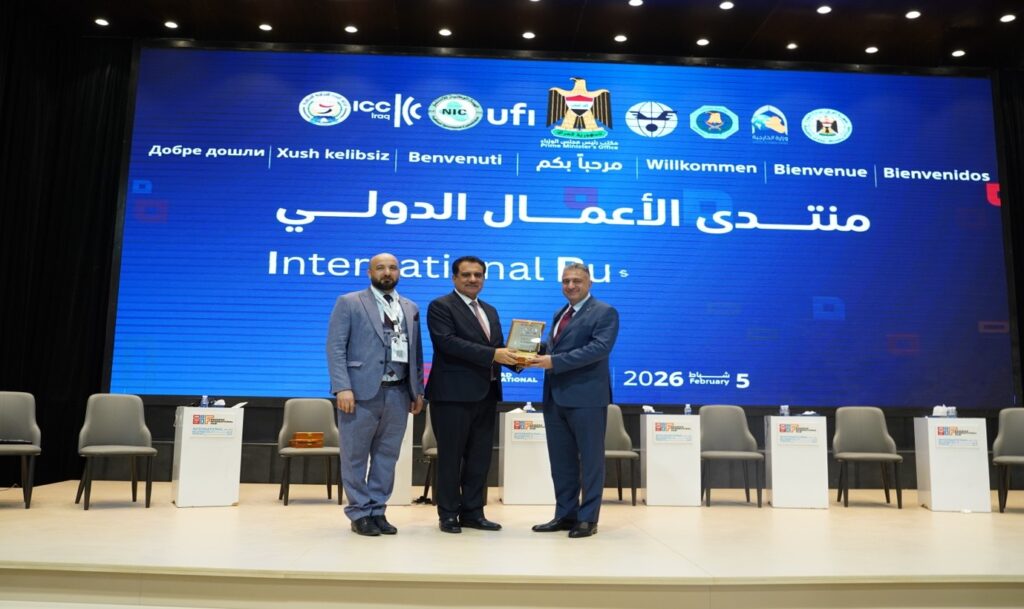
Following the panel discussion, Mr Ahmed Shaban, Chairman of IKBC, was formally presented with a commemorative plaque in recognition of his contributions to promoting Iraqi economic cooperation and strengthening international private-sector engagement. The plaque was presented by Mr Abdulrazzaq Al-Zuheiri, President of the Federation of Iraqi Chambers of Commerce (FICC).
In his remarks, Mr Al-Zuheiri expressed sincere appreciation for Mr Shaban’s continued efforts to encourage foreign companies to enter and operate in the Iraqi market. He highlighted Mr Shaban’s proactive role in building institutional bridges between Iraqi stakeholders and international partners, as well as his commitment to advancing structured, long-term economic cooperation that supports Iraq’s private sector and national development priorities.
Mr Al-Zuheiri also acknowledged Mr Shaban’s instrumental role in establishing the Iraq–Korea Business Council (IKBC), describing it as a strategic initiative that has strengthened bilateral trade relations, facilitated technology and knowledge transfer, and opened new channels for cooperation between Iraqi and South Korean companies. He emphasised that institutional platforms such as IKBC are essential to attracting high-quality foreign investment and reinforcing Iraq’s broader economic transformation strategy.
The recognition underscored the importance of private-sector leadership in Iraq’s development trajectory and reaffirmed the Federation’s strong support for initiatives that promote international partnerships, industrial capacity building, and increased foreign direct investment. In his response, Mr Shaban expressed his gratitude for the honour and reaffirmed IKBC’s commitment to supporting Iraq’s economic growth, enhancing institutional cooperation, and expanding sustainable opportunities for Iraqi and international businesses alike.
High-Level Roundtable Discussion
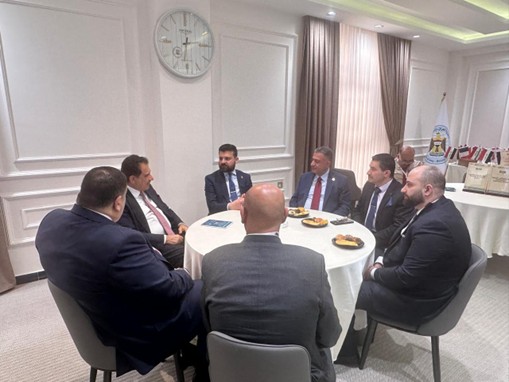
The day concluded with a roundtable discussion involving Mr Ahmed Shaban, Mr Ali Alqwaizi, Mr Abdulrazzaq Al-Zuheiri (President, FICC), Dr Thamer Qasim (Director, Iraqi General Authority of Customs), and Mr Samer Qrashi (Egyptian Embassy).
The discussion focused on future development priorities, the importance of government–private-sector partnerships, and the need to improve infrastructure and legislation to better support business activity. Participants also emphasised the importance of expanding international participation in future editions of the Fair to further position Baghdad as a global business and investment hub.