September 03, 2026
Director General Private Sector Development Department of Iraq’s MoT at IKBC
Iraq Korea Business Council Hosts Director General of the Private Sector Development Department at the Ministry of Trade to Discuss Prospects for Economic and Trade Cooperation
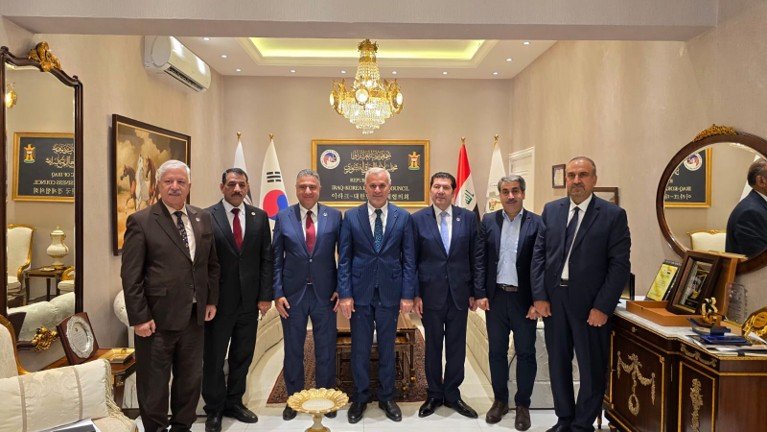
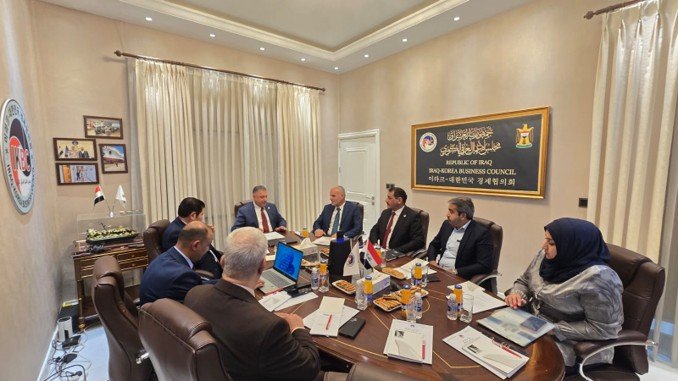
The Iraq Korea Business Council (IKBC) hosted, on Thursday, September 3, 2026, at the Council’s headquarters in Baghdad, Dr. Malik Khalaf Al Duraie, Director General of the Private Sector Development Department at the Ministry of Trade, and Mr. Taha Ali Hussein, Director of the Trade and Export Department at the Private Sector Development Department, as part of the Council’s efforts to strengthen communication and coordination between government institutions and the business community, and to support initiatives aimed at developing the private sector, trade, and investment activities in Iraq.
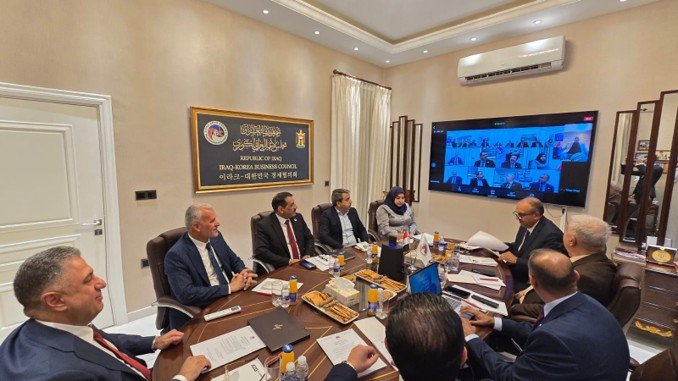
The meeting was chaired by Ambassador Shorsh Khalid Saeed, Deputy Minister of Foreign Affairs for Multilateral and Legal Affairs, and attended by Ambassador Basim Khattab, Head of the Asia and Australia Department; Dr. Riyadh Fakher Al-Hashimi, Director General of the Department of External Economic Relations at the Ministry of Trade; Dr. Mohammed Jumaa, Chargé d ’Affaires of the Embassy of Iraq in the Republic of Korea; Dr. Uday Mohammed Mazaal, Commercial Attaché; and Dr. Zeina Muthanna Jasim, Rapporteur of the Joint Committee, in addition to representatives of a number of Iraqi ministries, including the Ministries of Labor and Social Affairs, Justice, Agriculture, Culture, Transport, Communications, Higher Education and Scientific Research, and Education, as well as representatives of the Federation of Iraqi Industries and the Federation of Iraqi Chambers of Commerce.
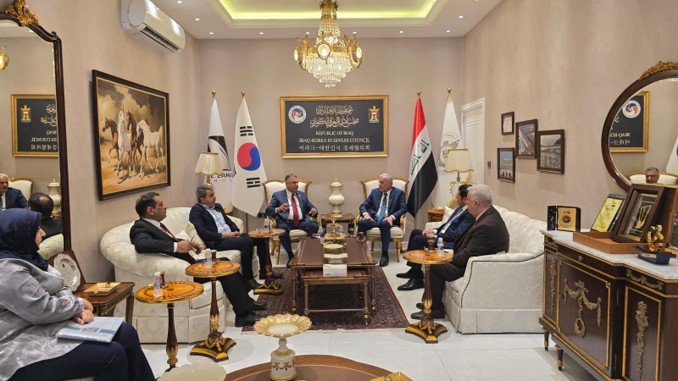
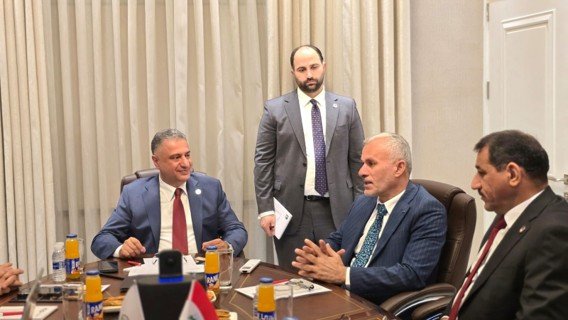
The meeting was hosted by Mr. Ahmed Shaban, Chairman of the Iraq Korea Business Council, and was attended by Dr. Osama Al-Quraishi, Vice Chairman of the Council, along with Council members Mr. Falah Ahmed Ajil Chairman of the Iraqi Association for Computer and Information Technology, Mr. Mohammed Abd Mohammed Vice President of the Federation of Iraqi Industries, and Dr. Raed Nizar Al Keldar, Adviser to the Federation of Chambers of Commerce.
The meeting was also attended remotely via Zoom by Dr. Oday Mohammed Mazal, Iraqi Trade Attaché at the Embassy of the Republic of Iraq in the Republic of Korea, further strengthening communication and coordination among stakeholders in economic and trade affairs and supporting avenues of cooperation between Iraq and the Republic of Korea.
During the meeting, Chairman of the Iraq Korea Business Council, presented an overview of the outcomes of his recent visit to the Republic of Korea, which included the inaugural founding meeting of the IKBC in Korea, conducted in accordance with the applicable regulations, laws, and procedures of the Korean Ministry of Trade and the relevant authorities in the Republic of Korea.
Mr. Shaban explained that the founding meeting was held in accordance with the officially approved frameworks and procedures and resulted in the formation of a Board of Directors comprising representatives of a number of reputable Korean companies. This represents a significant step toward establishing the institutional framework of the IKBC on the Korean side and strengthening its capacity to engage directly and systematically with the Korean business community and companies.
He noted that this development represents an important milestone in advancing the Council’s activities and opening broader avenues for economic and trade cooperation between Iraq and the Republic of Korea, particularly by providing a more effective framework for engaging with small, medium-sized, and large companies, introducing them to opportunities available in the Iraqi market, and encouraging them to establish partnerships and forms of cooperation with their Iraqi counterparts.
He further emphasized that having an active business council on the Korean side, with representatives of reputable Korean companies serving on its Board of Directors, would contribute to expanding membership and strengthening engagement with companies across different sectors and sizes. Cooperation should not be limited to large corporations, but should also provide opportunities for small and medium-sized enterprises, alongside larger companies, to explore the potential of the Iraqi market and identify opportunities for cooperation, investment, and business development.
He also noted that expanding channels of communication between Iraqi and Korean companies could provide an important platform for exchanging expertise, services, and products, exploring joint business opportunities, and building sustainable trade and investment relationships. This would enhance the presence of Korean companies in the Iraqi market while simultaneously creating broader opportunities for Iraqi companies to cooperate with their Korean counterparts.
The Chairman of the Council affirmed that this initiative forms part of the Council’s vision to build an integrated business network between Iraq and the Republic of Korea, based on direct institutional communication, facilitating connections between companies, and developing bilateral partnerships. Such efforts would help elevate economic relations between the two countries to broader levels and transform available opportunities for cooperation into practical projects and partnerships that serve the interests of the business communities in both countries.
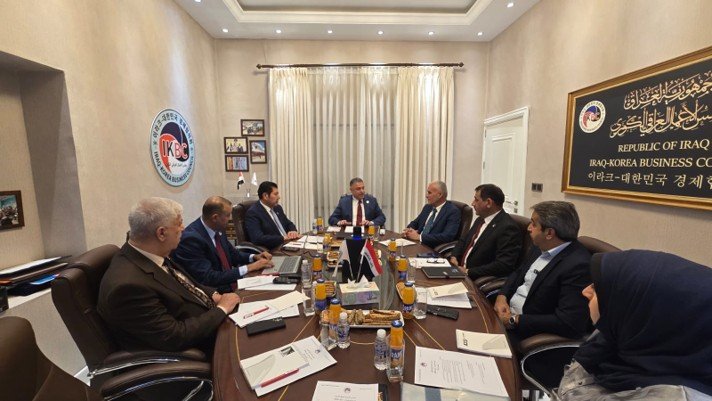
For his part, Dr. Malik Khalaf Al Duraie, Director General of the Private Sector Development Department at the Ministry of Trade, expressed his appreciation for the role played by the Iraq Korea Business Council in supporting the private sector and strengthening communication between the Iraqi and Korean business communities. He commended the Council’s efforts to establish effective channels of communication with companies and economic institutions and to create new opportunities for trade and investment cooperation between the two countries.
He highlighted the important role that business councils can play in supporting private sector development initiatives by creating an enabling environment for business-to-business engagement, promoting trade and investment opportunities, and encouraging the establishment of economic partnerships. He emphasized that the activities of the Iraq Korea Business Council represent a positive step toward strengthening economic relations between Iraq and the Republic of Korea.
He also praised the Council’s efforts to expand its network of relations with the Korean business community and its pursuit of an institutional framework for cooperation that enables companies of different sizes to explore opportunities available in the Iraqi market. Such efforts can contribute to enhancing trade and investment exchange and supporting business development between the two sides.
He stressed that continued communication between the Ministry of Trade and the IKBC represents an important factor in supporting initiatives aimed at developing the private sector, strengthening integration between government efforts and private sector initiatives, serving the Iraqi economy, and opening broader avenues for cooperation with international markets and companies.
The meeting provided an opportunity to exchange views and perspectives on a number of issues related to private sector development, trade, and economic cooperation, as well as to discuss the importance of strengthening communication and coordination between the Iraq Korea Business Council, the Ministry of Trade, and relevant government institutions.
The participants emphasized the importance of strengthening partnership and cooperation between the government and private sectors in a manner that supports the Iraqi business community, creates greater opportunities for companies and business leaders, and encourages initiatives that contribute to revitalizing trade and investment activity.
The meeting also highlighted the important role that the IKBC can play in supporting economic and trade relations between Iraq and the Republic of Korea and in utilizing its communication channels with the Korean business community to promote opportunities available in the Iraqi market and encourage Korean companies and institutions to explore opportunities for cooperation and partnership with their Iraqi counterparts.
The significance of such meetings comes in light of the growing role of the private sector in supporting economic development, stimulating trade and investment activity, and strengthening Iraq’s integration into international markets. They also underscore the importance of building sustainable economic relations based on cooperation, the exchange of expertise, and mutual interests.
The meeting also underscored the importance of strengthening institutional integration and coordination between the Federation of Iraqi Chambers of Commerce and Iraq’s business councils, in support of efforts to advance private-sector development and promote trade and investment activity across Iraq.
In this regard, Dr. Raed Nizar Al Keldar, Advisor to the Federation of Iraqi Chambers of Commerce, emphasized the importance of business councils systematically documenting their activities and international engagements through comprehensive reports and relevant information. This would enable the concerned authorities, particularly the Federation of Iraqi Chambers of Commerce and the Private Sector Development Department, to maintain a clear and continuous overview of the councils’ activities and follow up on their engagements and initiatives.
Also commended the Iraq Korea Business Council for its distinguished approach to organizing its meetings and documenting its activities through regular reports. He highlighted the value of building on the Council’s experience by encouraging business councils to regularly provide the relevant authorities with reports and information covering their activities, meetings, and international engagements.
The discussion further emphasized the importance of aligning efforts and strengthening coordination among Iraq’s various business councils and economic and trade institutions, while working within an integrated framework that supports the development of the private sector and enhances its presence in international markets. Greater institutional coordination and the complementarity of roles among relevant government and economic institutions, together with business councils, can enhance the effectiveness of economic initiatives and help translate them into tangible outcomes in the fields of trade, investment, and international economic cooperation.
Against this backdrop, the meeting reaffirmed the supportive and coordinating role of the Federation of Iraqi Chambers of Commerce in strengthening communication with business councils, following up on their activities, and supporting their contribution to the development of Iraq’s economic and trade relations. Such coordination is essential to aligning collective efforts around a common objective: strengthening the Iraqi private sector, expanding its international engagement, and enhancing its capacity to establish sustainable economic and commercial partnerships with international markets.
In this context, the Iraq Korea Business Council continues its efforts to strengthen communication with government and economic institutions, expand its network of relations with the business communities in Iraq and the Republic of Korea, and provide an enabling environment for communication between companies and investors. These efforts aim to open new avenues for economic and trade cooperation between the two countries.
The meeting also reflects the Council’s commitment to enhancing coordination with institutions concerned with private sector development and trade, in line with the importance of integrating the efforts of government institutions, business councils, and the private sector to achieve more effective outcomes in supporting economic activity and creating new opportunities for cooperation and investment.
The Iraq Korea Business Council reaffirms its continued efforts to strengthen Iraqi-Korean economic relations and support communication between companies and institutions in both countries, thereby creating opportunities for further trade and investment partnerships and contributing to the development of long-term economic relations based on mutual interests.
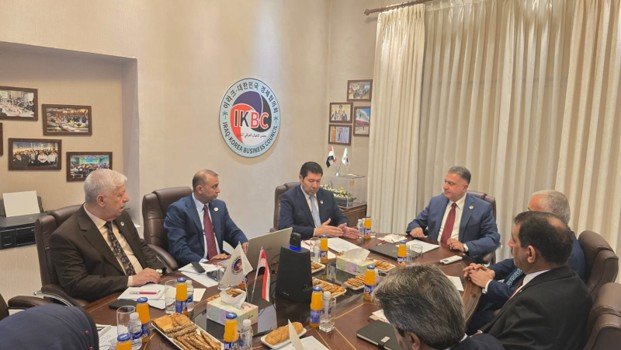
At the conclusion of the meeting, the participants emphasized the importance of maintaining continued communication and coordination between the Iraq Korea Business Council, the Ministry of Trade, and relevant authorities, and of developing areas of cooperation during the coming period in a manner that supports the Iraqi private sector, strengthens trade and investment activity, and opens broader avenues for cooperation and partnership between Iraq and the Republic of Korea.